The History of the Moriori People
Introduction
Moriori are the Waina Pono, the Indigenous people of Rēkohu, Rangihaute and the surrounding islands. They are a distinct Polynesian people who, over many centuries on Rēkohu, developed their own rē (language), tikane (customs/traditions) and identity while remaining part of the wider Polynesian family.
Their history spans many centuries and is preserved through ancient traditions, genealogy, oral history, archaeological evidence, nineteenth-century writings by Moriori elders, and historical records.

The earliest chapters of Moriori history are preserved through hokopapa and stories handed down from generation to generation. These traditions explain the origins of the world, the settlement of Rēkohu, and the development of Moriori society. They remain an important part of Moriori identity today.
The later chapters are supported by written records, including journals, letters, petitions, government correspondence, missionary accounts and court records. Together they tell the story of the invasion of 1835, the enslavement of Moriori, the loss of land, the removal of ancestral remains and cultural treasures, and the long struggle for justice that culminated in the settlement between Moriori and the Crown.
This history follows that chronology. It begins with the traditions of creation and concludes with the recognition of Moriori as a living Indigenous people whose language, culture and identity continue to be revitalised.
The World Before Time
According to Moriori tradition, there was a time when Rangi, the Sky Father, and Papatuanuk', the Earth Mother, were held tightly together. Between them there was no light and no place where life could exist.
A powerful wairu named Rangitokona separated the two by placing ten great pillars one upon another until they held the heavens above the earth. As Rangi and Papatuanuk' were separated, Te Ao Mārama, the world of light, came into being. It was into this new world that life emerged.
Rangitokona occupies an important place in Moriori tradition. He is remembered as the propper-up of the heavens and his ten pillars continue to symbolise values passed down through generations. The central pou inside Hokomenetai at Kopinga Marae represents Rangitokona and carries the names of every known Moriori living at the time of the invasion of 1835.
Following the separation of Heaven and Earth, Rangitokona heaped soil upon Papatuanuk' and created Tū. From Tū descended Rongo, Tāne, Tangaroa, Rongomai, Kahukura, Tiki, Uru, Ngangana, Io, Iorangi, Waiorangi, Tahu, Moko, Maroro, Wakehau, Toi, Rauru, Whatonga, Ruanuku, Motu-ariki, Te Ao Mārama, Tumare, Ranganuku, Matariki, Wari and Ro Tauira. Together these ancestors became known as Ta Hunau o ta Rangi, the descendants of Heaven.
Among these early generations were Tahiri Mangate and Rangimaomao, remembered as the parents of the winds. The winds that continue to sweep across Rēkohu today are understood to descend from these ancestors.
These traditions established the relationship between humanity, ta taiora (the natural world) and the ancestors. They explain why genealogy is central to Moriori identity and why people, land and sea remain inseparable.
Hokopapa
Moriori history begins with hokopapa. For countless generations, long genealogies were memorised and recited by rangatamatua. These genealogies preserved the succession of ancestors, recorded the passage of time and connected every generation with those who had come before.
Among the most important nineteenth-century recorders of hokopapa were Minarapa Tamahiwaki, Aperahama Maikoua and Hirawanu Tapu. Their genealogies contain well over one hundred generations of ancestors and preserve the sequence of events remembered within Moriori tradition.
Both Tamahiwaki and Maikoua identified Rongomaiwhenua as the founding ancestor of Moriori following the earliest generations descended from Te Ao Mārama. Their genealogies also record the arrival of Kahu many generations later, followed by the migrations associated with Rangimata and Rangihoua.
The remarkable consistency between these independently preserved genealogies demonstrates the care with which Moriori preserved their history. The genealogies recorded the succession of ancestors and provided the framework through which the settlement of Rēkohu and the development of Moriori society were remembered across many centuries.
Hokopapa remains central to Moriori identity. It connects every individual to their ancestors, their families, their land and the responsibilities inherited from previous generations.
Rongomaiwhenua and the First Moriori
Moriori tradition identifies Rongomaiwhenua as the founding ancestor of the Moriori people. He appears immediately after Te Ao Mārama within both of the principal genealogies recorded during the nineteenth century. His descendants established themselves upon Rēkohu many generations before the arrival of later voyaging groups.
Twenty-six to twenty-eight generations separate Rongomaiwhenua from the arrival of Kahu (the next arrival on the islands) according to the genealogies recorded by Tamahiwaki and Maikoua. Approximately seventy further generations passed before the arrival of Rangimata and Rangihoua. These long spans of genealogy indicate that Moriori tradition remembers a substantial period of settlement before later migrations occurred.
Over succeeding generations the descendants of Rongomaiwhenua developed a close relationship with the islands. Life on Rēkohu differed from life elsewhere in Polynesia. The cooler climate, isolation and limited natural resources required people to adapt.
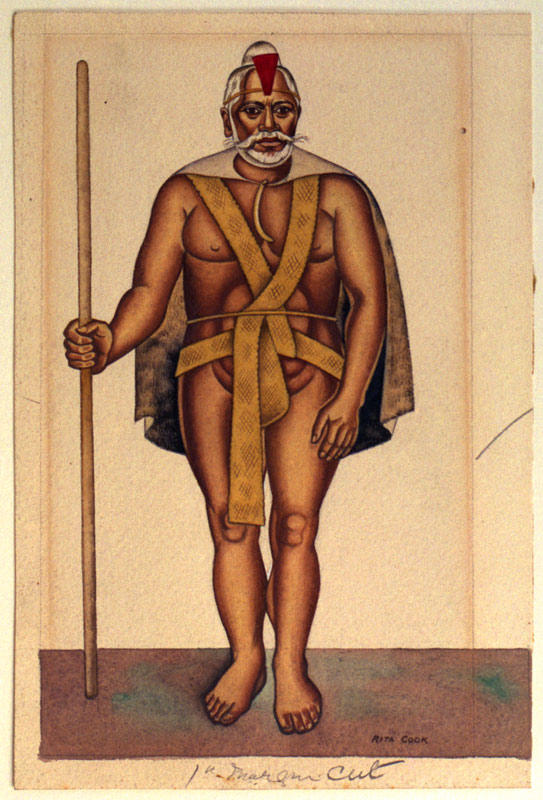
Large forest trees suitable for constructing ocean-going waka were absent. Food resources varied with the seasons and successful harvesting depended upon careful observation of the environment. Communities learned to manage resources sustainably and developed customs that reflected the unique conditions of the islands.
The sea became the principal highway linking settlements across Rēkohu, Rangihaute and the smaller surrounding islands. Fishing, sealing, bird harvesting and the gathering of shellfish formed an important part of everyday life.
Over time Moriori society developed its own language, customs and identity while maintaining clear connections with the wider Polynesian world.
Kahu and the Settlement of Rēkohu
Many generations after Rongomaiwhenua, another important migration reached Rēkohu. Moriori tradition records the arrival of Kahu and the people who travelled with him. By the time Kahu arrived, descendants of Rongomaiwhenua had already occupied the islands for many generations.
The genealogies record twenty-six to twenty-eight generations between Rongomaiwhenua and Kahu. They identify Kahu-ti as one of the ancestors living on Rēkohu at the time of Kahu's arrival.
Rather than replacing the earlier inhabitants, the traditions describe Kahu's arrival as another stage in the development of the Moriori people. The descendants of earlier settlers and the newcomers became part of the same growing population.
Generations continued to pass. Families spread throughout Rēkohu and Rangihaute, occupying coastal settlements and maintaining strong connections with particular areas of land and sea.
Their history was preserved through hokopapa, songs, stories and the knowledge of elders. Every generation inherited the responsibility of preserving these traditions for those who would follow.
Rangimata and Rangihoua
Roughly seventy generations after Kahu, Moriori tradition records another important period in the settlement of Rēkohu.
The migrations associated with Rangimata and Rangihoua brought further groups to the islands. Their arrival forms one of the major turning points preserved within Moriori genealogy.
Mihingarangi Forbes interviews archaeologist Justin Maxwell, who believes the canoe discovered on Rēkohu is the ancient Rangihoua waka from Moriori oral tradition.

Te Ao with Moana talks to the excavation team about the Rangihoua waka.
By this time Moriori society was already well established. The descendants of Rongomaiwhenua and Kahu occupied the islands and maintained their own customs and traditions.
The arrival of new groups introduced fresh relationships and, according to Moriori tradition, also brought conflict.
Disputes over resources and authority created periods of violence between different families. These conflicts would eventually lead to one of the defining developments in Moriori history.
From these struggles emerged a new philosophy that would shape Moriori society for centuries to come. That philosophy became known through the teachings of Nunuku-whenua.
Nunuku and the Covenant of Peace
As Moriori society continued to develop, disputes between different families occasionally led to violence. The traditions recorded by Moriori describe a period in which conflict became increasingly destructive and threatened the stability of the imi.
It was during this time that the ancestor Nunuku-whenua established a new law that would become one of the defining features of Moriori society.
Nunuku did not forbid disagreement or competition. Instead, he placed limits on how conflict could be resolved. Serious disputes could still be settled through ritual combat, but once first blood had been drawn the fighting was to stop. Deliberately killing another person became forbidden. This law became known as Nunukutanga.
The covenant was accepted by succeeding generations and remained the foundation of Moriori society for centuries. Children were raised knowing that taking life was prohibited except under the most exceptional circumstances. Peace became more than a rule. It became a defining principle of Moriori identity.
The covenant influenced every aspect of life. Relationships between families became more stable, resources could be shared more effectively, and communities developed without the cycles of warfare that affected many other parts of Polynesia.
The commitment to Nunukutanga endured for many generations. By the nineteenth century it remained one of the strongest values within Moriori society and would shape one of the most difficult decisions the people would ever face.
Moriori Society
Over many centuries Moriori developed a distinct culture adapted to the environment of Rēkohu and the surrounding islands.
The islands presented challenges unlike those found elsewhere in Polynesia. The climate was cooler, large trees suitable for constructing ocean-going waka were absent, and food resources varied considerably throughout the year. These conditions encouraged careful management of natural resources and a detailed understanding of the environment.
Fishing formed an important part of daily life. Moriori also gathered shellfish, harvested seabirds and their eggs, and hunted seals. Seasonal food gathering required extensive knowledge of weather, tides and breeding cycles.
Communities were generally located along the coast where access to food and transport was easiest. Travel between settlements took place by sea using waka suited to local conditions.
Moriori became highly skilled in the use of natural materials. Wood, stone, bone, shell and fibre were fashioned into tools, fishing equipment, clothing and ornaments. Kopi trees provided shelter, food and timber for many purposes.
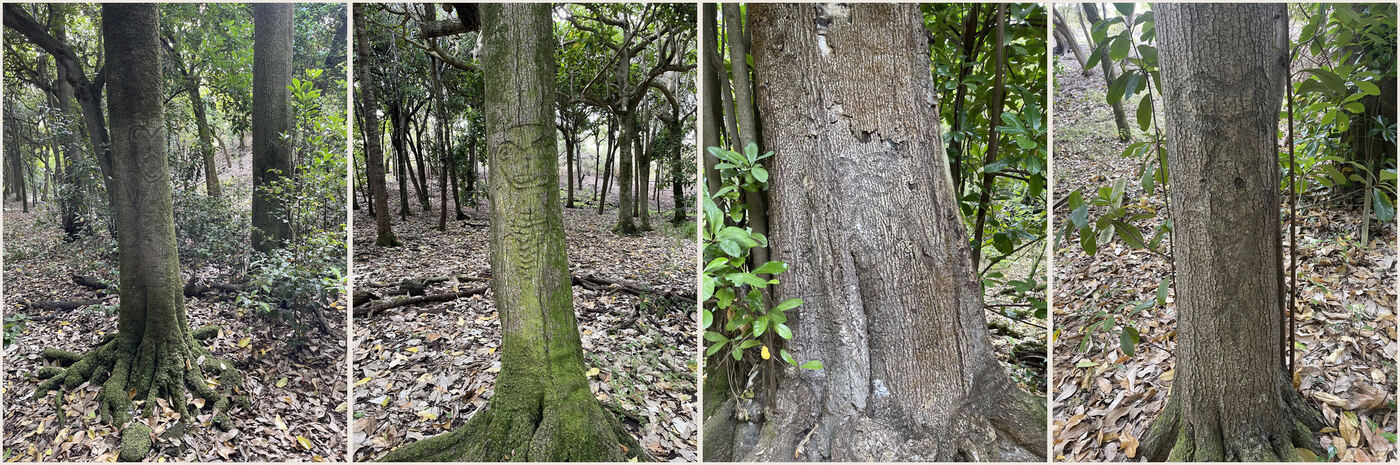
One of the most distinctive expressions of Moriori culture was the creation of rakau momori on living kopi trees. These images recorded ancestors, significant events and spiritual beliefs. Although traditionally described as carvings, they were more likely created by bruising and manipulating the living bark rather than cutting deeply into the tree. As the trees continued to grow, the images became permanent features of the forest itself.
Spiritual life was closely connected to ta taiora (the natural world). Ancestors remained an active presence within everyday life, and places associated with burials or important events were regarded as tchap'. Respect for these places formed an essential part of Moriori custom.
Genealogy continued to provide the foundation of society. Every person understood their connection to earlier generations through hokopapa. Knowledge was preserved by elders and passed to younger generations through careful teaching.
By the early nineteenth century Moriori had occupied Rēkohu for many centuries. They had developed their own language, customs and identity while remaining part of the wider Polynesian family.
First European Contact
In 1791, the British survey brig HMS Chatham was blown off course and landed at Kaingaroa Harbour on Rēkohu. The captain named the islands after the ship. The captain hoisted the British flag and left a lead plaque as evidence of Britain's arrival and claim to the islands. During a brief encounter, the crew attempted to barter for food and water. A misunderstanding over a fishing net led to a confrontation in which the Moriori man Tamakaroro was shot and killed by musket fire.
Years after that unfortunate first encounter, sealers, whalers and traders were attracted to the rich marine resources surrounding Rēkohu.
European visitors also began recording their observations of Moriori society. Some accounts described the people's generosity and hospitality, while others misunderstood or misrepresented aspects of Moriori culture.
Although contact with Europeans introduced change, Moriori society remained largely under Moriori authority during the early decades of the nineteenth century. That situation changed dramatically in 1835.
The Invasion of 1835
In November 1835, the brig Rodney carried groups of Ngāti Mutunga and Ngāti Tama from Port Nicholson, Wellington, to Rēkohu.
The migration followed earlier displacement and conflict in mainland New Zealand. By 1835, members of Ngāti Mutunga and Ngāti Tama were living around Port Nicholson. From there they seized the opportunity to travel to Rēkohu, which they intended to occupy.
Moriori tradition records that many of the newcomers were unwell after the voyage. In accordance with tikane Moriori, they were welcomed, fed and cared for until they recovered.
Shortly after that, the newly arrived tribes also declared that they had taken possession of the islands. The newcomers moved quickly to occupy settlements and resources. Some Moriori were killed almost immediately while others were forced from their homes.
Faced with an unprecedented situation, Moriori leaders called a gathering at Te Awapatiki to decide how the people should respond.
Many younger men argued that the invasion should be resisted by force. They believed Moriori greatly outnumbered the newcomers and could defeat them before further reinforcements arrived.
The elders considered this option carefully. In the end they chose to uphold the covenant established by Nunuku-whenua centuries earlier. They concluded that taking life would violate the law that had governed Moriori society for generations. The decision was a conscious decision to remain faithful to Nunukutanga despite the danger confronting the people, and importantly, it was not an act of surrender.
Men, women and children were killed. Many were murdered in ways intended to terrorise those who survived. Cannibalism accompanied some of the killings. Those who remained alive were captured and enslaved.
The invasion of 1835 transformed Moriori society within a matter of weeks. Communities that had existed for generations were destroyed. Families were separated. Traditional authority collapsed under the cruel treatment of the invaders.
Although large numbers of Moriori were killed during the invasion, many more survived and entered a period of slavery that would continue for decades.
Slavery and Kongenge
Following the invasion, surviving Moriori were enslaved and subjected to harsh treatment and forced labour. Many were required to work without pay, cultivate food, gather firewood and perform other labour for their owners. Permission was required to travel, marry or make decisions affecting their own lives.
Moriori were forbidden from marrying other Moriori without approval. In many cases families were deliberately separated.
The treatment of Moriori varied between owners, but the institution of slavery remained widespread throughout the islands.
Some Moriori died from physical abuse. Others died from disease, hunger or exhaustion. Moriori also remembered another cause of death. They called it kongenge.
Kongenge has often been translated as despair, but the word carries a deeper meaning. It describes the loss of hope and spirit experienced by people who had witnessed the destruction of their society, the deaths of their families and the loss of their freedom. Moriori leaders later recorded that many of their people died from kongenge.
Despite these circumstances, Moriori continued to preserve their identity. Elders maintained genealogies, language and traditions wherever possible. Families cared for one another and continued to teach younger generations about their ancestors.
The determination to preserve these traditions ensured that Moriori history survived one of the darkest periods in the history of Rēkohu.
Appeals to the Crown
By the 1840s, Moriori had lived under slavery for several years. Although the widespread killing that followed the invasion had largely ceased, Moriori remained enslaved.
Christianity arrived on Rēkohu in 1841 with Māori Anglican teachers. Moriori later recalled that the introduction of Christianity contributed to an end to the widespread killing and cannibalism that had followed the invasion. Slavery, however, continued.
In 1848 Bishop George Augustus Selwyn visited Rēkohu. He observed that Moriori had been reduced to the condition of serfs and were obliged to obey the orders of their Māori masters. After leaving the islands, Selwyn discussed the situation with Governor George Grey, but no immediate action followed.
Some Moriori were removed from Rēkohu altogether. Between 1843 and 1848, groups of Moriori were taken as slaves to the Auckland Islands, more than 1,500 kilometres to the south-west. The settlement proved harsh. The climate was severe, crops failed, supplies were unreliable and several Moriori died there. Others were later taken to Stewart Island and ports around mainland New Zealand, beginning a Moriori diaspora beyond Rēkohu.
The Crown established its first permanent presence on the islands in 1855 with the appointment of a Collector of Customs. Soon after arriving he became aware that slavery still existed. He reported the situation to the Colonial Secretary, explaining that Moriori remained in a state of servitude.
Over the next several years additional Crown officials visited Rēkohu and confirmed that Moriori continued to live under restrictions imposed by those who had enslaved them. Although some officials encouraged Māori leaders to abandon slavery, enforcement was inconsistent and Moriori remained vulnerable.
Moriori looked increasingly to the Crown for protection. In 1859 Moriori elders at Otonga prepared an account of their history and circumstances for Governor Grey. They explained that they were a distinct people and asked that Māori be removed from the islands and their lands restored. No reply to this letter is known to survive.
In 1861 another visiting official observed that Moriori were no longer routinely beaten and could marry, but he also reported that Māori closely monitored their movements and conversations. He wrote that Moriori continued to place their faith in the Crown, believing that the Governor would eventually restore their freedom and return at least some of their land.
The following year Moriori again appealed to the Governor. They requested access to the same education and health services being provided to Māori and asked for land on which they could establish themselves independently.
The Resident Magistrate supported their request. He reported that Moriori grieved because they possessed no land of their own and were permitted to cultivate only at the discretion of others. He observed that this uncertainty discouraged them from improving their circumstances because they never knew whether they would be allowed to remain where they lived.
Later in 1862, Hirawanu Tapu prepared a detailed petition to Governor Grey on behalf of the Moriori people. Running to 131 pages, it was one of the most significant political documents produced by Moriori during the nineteenth century.
The petition carried the signatures of thirty Moriori elders. It also listed the names of those who had been killed during the invasion, those who had died in slavery or from kongenge, and those who remained alive. The document carefully distinguished between those who had been killed and eaten and those who had died from other causes.
The petition challenged Māori claims to ownership of Rēkohu and asked the Crown to uphold the law. Moriori argued that land taken unjustly should be returned to its rightful owners and reminded the Governor that they were subjects of the Crown entitled to its protection. Governor Grey never travelled to Rēkohu.
Although conditions slowly improved during the following years, Moriori received none of the comprehensive protection they had sought. Their appeals established a clear record that they had repeatedly asked the Crown to intervene and protect their rights.
The Native Land Court
The end of slavery did not restore Moriori control over their land. During the 1860s the Crown introduced the Native Land Court to determine ownership of Māori customary land throughout New Zealand. In 1870 the Court sat on Rēkohu to investigate ownership of almost the entire Chatham Islands. By this time, most of Ngāti Mutunga and Ngāti Tama had left the island, with some members of Ngāti Mutunga returning to participate in these hearings.
For Moriori, the hearings represented an opportunity to present their history and seek recognition of their ancestral rights. Moriori leaders gave extensive evidence describing their long occupation of Rēkohu, the invasion of 1835, the killings, the years of slavery and their continued connection to the land.
The Court accepted that Moriori had occupied the islands before the invasion. However, applying colonial legal principles, the Court incorrectly concluded that conquest had transferred ownership of the islands to the invaders. It awarded almost all of the land to Ngāti Mutunga. Moriori received only small reserves, around 2-3% of what they had traditionally owned. This decision had lasting consequences.
Many Moriori became tenants or labourers on land their families had occupied for generations. Economic independence became extremely difficult, and opportunities to rebuild the Moriori community were severely limited.
The Native Land Court decision also reinforced the effects of the invasion. Instead of recognising the rights of the original inhabitants, it rewarded Ngāti Mutunga for their invasion within the framework of colonial law.
For Moriori, the loss of land became one of the most enduring legacies of the nineteenth century. It affected housing, employment, cultural sites, food gathering and the ability of future generations to maintain their connection with their ancestral places.
Although the Court's decision settled legal ownership under colonial law, it did not settle Moriori claims. Those claims continued to be asserted by successive generations and would eventually become an important part of the Waitangi Tribunal inquiry more than a century later.
The Removal of Koimi Tchakat and Miheke
The loss of land was not the only loss experienced by Moriori during the nineteenth century.
As European scientific interest in Indigenous peoples grew, museums, collectors and researchers began seeking human remains and cultural objects from across the Pacific. Moriori became one of the subjects of this collecting.
Koimi tchakat, the ancestral remains of Moriori, were removed from burial places without the knowledge or consent of their descendants. Burial caves and urupā were disturbed by collectors searching for skeletons and skulls to supply museums and private collections in New Zealand and overseas.
One of the most active collectors was the ethnologist Augustus Hamilton. During his visits to Rēkohu he removed Moriori skulls from burial places and sold them to several institutions, including the Colonial Museum in Wellington. Other collectors followed. Among them were Crown officials acting in a private capacity who obtained koimi tchakat and sent them to museums for study and display.
Between 1866 and 1904, the Colonial Museum alone received at least fifty-eight koimi tchakat Moriori through purchases and donations. They were measured, studied, displayed to the public and exchanged with other museums, universities and scientific institutions in New Zealand and overseas.
In one overseas museum, Moriori remains were displayed beside those of early humans and a monkey for comparison. Such displays reflected racial theories that were common at the time but have since been thoroughly rejected.
There is no evidence that Moriori consented to the removal, study or trade of their ancestors. The disturbance of burial places violated the tchap' of those sites and prevented Moriori from fulfilling their responsibility as tchieki of their karāpuna.
Collectors also removed many forms of miheke. Tools, ornaments, rakau momori and other cultural treasures were taken from burial places and sacred sites. Some of the most significant losses occurred at Ouenga, where rare objects were removed from urupā for museum collections.
Perhaps the most visible losses involved rakau momori. For generations Moriori bruised living kopi trees with images of ancestors, spiritual figures and important events. Rather than preserving these images where they stood, collectors removed entire sections of living trees and shipped them to museums in New Zealand and Britain. In doing so they separated the rakau momori from the forests that had given them meaning. By the early twentieth century, many of the finest examples of Moriori material culture were no longer on Rēkohu.
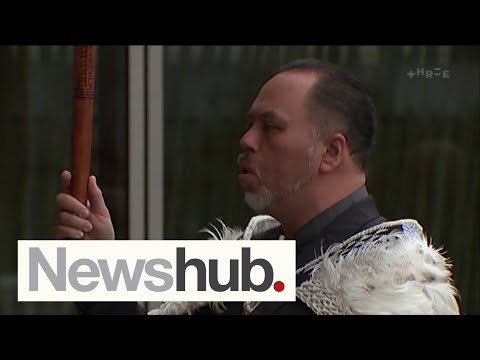
Today, the return of koimi tchakat and other miheke remains an important priority for Moriori. Repatriation recognises that ancestral remains are not museum specimens. They are karāpuna who belong with their descendants.
The Myth of Moriori Extinction
While museums were collecting the physical remains of Moriori, another form of harm was spreading through New Zealand.
During the early twentieth century several influential writers promoted the false claim that Moriori were a separate Melanesian race who had inhabited mainland New Zealand before Māori arrived. According to this theory, Māori had driven the Moriori from New Zealand to Rēkohu centuries before European contact.
The theory was wrong. It had no basis in Moriori tradition and ignored the evidence preserved through Moriori genealogy, language and culture. Despite this, the idea gained widespread acceptance and entered popular understanding.
The myth became even more damaging when it was adopted by the education system. The School Journal, published by the Department of Education and distributed to schools throughout New Zealand, taught generations of children that Moriori were "lazy", "stupid", "shiftless", "a race inferior to the stalwart Maoris", and that they were extinct.
For decades these statements appeared in classrooms across the country. The myths spread beyond schools into newspapers, books, radio programmes and political debate. They were sometimes used to justify European colonisation by arguing that Māori had themselves displaced an earlier Indigenous people.
Moriori continued to live on Rēkohu and elsewhere throughout this period, yet many New Zealanders believed they no longer existed. Some scholars challenged these theories during the early twentieth century. Research into Moriori language, archaeology and material culture increasingly demonstrated that Moriori were Polynesian and closely related to Māori, while also developing their own distinct identity after many centuries on Rēkohu.
Despite this evidence, the myths persisted for much of the twentieth century. The damage extended beyond historical misunderstanding. Many Moriori descendants grew up hearing that their people were extinct or that they had never existed as a distinct Indigenous people. Others concealed their identity because of prejudice or ridicule.
The Waitangi Tribunal later concluded that the Crown had contributed significantly to the spread of these myths through the education system. The continued publication of inaccurate material helped entrench false beliefs that remained widespread long after historians had rejected them.
Correcting these misconceptions has become an important part of Moriori revitalisation. Modern historical research, archaeological evidence, linguistic studies and the records preserved by Moriori themselves all confirm that Moriori are the Indigenous people of Rēkohu whose history has continued uninterrupted from the earliest settlement of the islands to the present day.
Survival and Revitalisation
Although Moriori endured immense loss during the nineteenth century, they did not disappear. Families continued to live on Rēkohu and Rangihaute, while others settled elsewhere in New Zealand. Parents continued to tell their children who they were, even when prejudice caused some families to keep their identity private. Genealogies were preserved, stories continued to be told, and the names of ancestors were remembered.
Throughout the twentieth century, Moriori descendants worked to preserve what remained of their language, history and cultural knowledge. Important nineteenth-century manuscripts written by Moriori elders became invaluable records of traditional knowledge. Researchers, historians and descendants began documenting family histories and preserving photographs, recordings and archival material.
The final decades of the twentieth century marked the beginning of a renewed public expression of Moriori identity. In 1980 Hokotehi Moriori Trust was established to represent the interests of Moriori descendants and to lead cultural, social and economic development. The Trust became a focal point for the revitalisation of language, genealogy, traditional knowledge and cultural practices.
One of the most significant achievements of this period was the construction of Kopinga Marae (Mere in Moriori). Opened in 2005, Kopinga became the first marae (mere) built by Moriori in modern times. Its distinctive design reflects Moriori traditions and the natural environment of Rēkohu. More importantly, it provides a permanent home where descendants can gather, celebrate their culture and welcome visitors.
Language revitalisation also gathered momentum. Surviving historical records were carefully studied to rebuild vocabulary, pronunciation and grammar. New generations of learners began speaking ta rē Moriori and using it in ceremonies, publications and education.
Moriori also sought the return of koimi tchakat and miheke held in museums around the world. Repatriation became both a cultural and spiritual responsibility, recognising that ancestors belong with their descendants.
Archaeological research also contributed to the revitalisation of Moriori history. Sites across Rēkohu provided further evidence of the depth of Moriori occupation and the distinctive culture that had developed on the islands over many centuries.
The revitalisation of Moriori identity did not seek to recreate the past exactly as it had been. Instead, it built upon the knowledge preserved by earlier generations while ensuring that Moriori culture could continue to grow in the modern world.
The Waitangi Tribunal
For many years Moriori sought formal recognition of the injustices they had experienced.
In 1986 Hokotehi Moriori Trust lodged a claim with the Waitangi Tribunal. The claim alleged that the Crown had failed to protect Moriori following the invasion of 1835 and had later compounded those failures through its administration of the islands.
The Tribunal heard extensive historical evidence over several years. Witnesses included historians, researchers and Moriori descendants who presented both documentary evidence and oral history.
In 2001 the Tribunal released its report, Rekohu: A Report on Moriori and Ngāti Mutunga Claims in the Chatham Islands.
The Tribunal concluded that the Crown had breached the Treaty of Waitangi and its principles in several important respects.
It found that Crown officials became aware that Moriori remained enslaved after British sovereignty had been established but failed to take timely and effective action to end slavery.
The Tribunal also found that the Crown failed to protect Moriori interests in land, particularly through the operation of the Native Land Court, whose decisions largely confirmed the results of conquest rather than recognising the rights of the original inhabitants.
The report also examined the removal of koimi tchakat, the spread of myths about Moriori history and the wider consequences of Crown actions and omissions.
The Tribunal's findings became the foundation for negotiations between Moriori and the Crown.
Settlement and Crown Apology
Formal negotiations between Moriori and the Crown began in 2003 after Moriori secured a mandate to negotiate a historical settlement. Negotiations continued over many years and, following a period of pause, resumed in 2016. An Agreement in Principle was signed in 2017, paving the way for a full Deed of Settlement.
On 14 February 2020, representatives of Moriori and the Crown signed the Moriori Deed of Settlement. The signing recognised that the negotiations had concluded and recorded the agreement reached between the parties. It also set out the historical account agreed by Moriori and the Crown, the Crown's acknowledgements of its breaches of the Treaty of Waitangi and its principles, its formal apology to Moriori, and the cultural, financial and commercial redress that would be provided.

The Deed itself did not complete the settlement. Like all Treaty settlements, it required legislation to give legal effect to the agreement.
The Moriori Claims Settlement Bill was introduced to Parliament in 2021. The Bill received its first reading on 16 June 2021, when Members of Parliament debated the history of Moriori and the purpose of the settlement before voting to send the Bill to the Māori Affairs Committee for public submissions and detailed consideration.
Following the select committee process, the Bill returned to Parliament for its second reading on 24 November 2021. Members again debated the settlement and considered the committee's recommendations before voting for the Bill to proceed to its final stage.
The third reading took place on 30 November 2021. This debate marked Parliament's final consideration of the settlement legislation. Members from across the House acknowledged the injustices suffered by Moriori, recognised the resilience of the people, and expressed support for the settlement. At the conclusion of the debate, the Bill passed its final reading with unanimous support.
On 13 December 2021, the Moriori Claims Settlement Act 2021 received Royal Assent and became law. The Act gave legal effect to the Deed of Settlement. It formally settled the historical claims of Moriori against the Crown and implemented the agreed package of redress. It also gave statutory recognition to the Crown's acknowledgements and apology, established cultural redress arrangements, and provided for the transfer of settlement assets.
The settlement represented the culmination of generations of work by Moriori leaders and descendants. Within the Deed of Settlement, the Crown acknowledged that it had breached the Treaty of Waitangi and its principles through a series of actions and omissions that caused lasting prejudice to Moriori.
The Crown acknowledged that it had failed to provide effective protection after becoming aware that Moriori remained enslaved. It acknowledged that its institutions failed to recognise and adequately protect Moriori rights and that Crown actions contributed to the loss of Moriori land, culture and authority.
The Crown also acknowledged its role in the dissemination of false and harmful myths about Moriori through the education system. These myths contributed to widespread misunderstanding and caused lasting harm to Moriori identity and reputation.
As part of the settlement, the Crown formally apologised to Moriori. The apology recognised the suffering experienced by generations of Moriori and expressed profound regret for the Crown's failures. It acknowledged the resilience of Moriori and recognised the efforts of successive generations to preserve their identity despite the injustices they had endured.
The settlement included financial and cultural redress, the return of significant sites, mechanisms to strengthen the relationship between Moriori and the Crown, and measures to support the ongoing revitalisation of Moriori language, culture and heritage.
Although the settlement cannot undo the events of the past, it represents an important milestone in acknowledging historical truth, restoring the mana of Moriori, and establishing a renewed relationship between Moriori and the Crown.
Conclusion
The history of the Moriori people spans countless generations. It begins with the traditions of Rangitokona and the separation of Rangi and Papatuanuk'. It continues through the settlement of Rēkohu, the development of a distinct Polynesian society and the establishment of Nunukutanga, a covenant of peace that shaped Moriori life for centuries.
The invasion of 1835 brought immense suffering. Hundreds of Moriori were killed. Many more were enslaved. Families lost their land, their freedom and, in many cases, their hope. Crown institutions later failed to provide the protection that Moriori repeatedly sought.
Yet the history of Moriori did not end there. Through every generation, descendants preserved their genealogy, language, traditions and identity. They challenged myths that denied their existence, sought the return of their ancestors and cultural treasures, rebuilt places of gathering, revived their language and secured recognition of the injustices they had endured.
Today, Moriori remain the Waina Pono of Rēkohu and Rangihaute. Their history continues to be written by each new generation that learns its language, preserves its traditions and carries forward the legacy of those who came before.